The Life and Techniques of Vincent van Gogh
Vincent van Gogh remains one of the most widely recognized figures in Western art history, not only for the emotional intensity of his work but also for the distinctive methods he developed over a relatively short career. His paintings, characterized by bold colors, vigorous brushstrokes, and a sense of movement, continue to captivate audiences and scholars alike. Understanding the techniques and personal context behind his art offers insight into how an artist’s life experiences can shape a creative process.
Van Gogh’s journey into painting began later in life, after failed attempts at other professions. His early works were somber and often focused on the lives of peasants, reflecting the influence of Dutch Realism. However, his move to France exposed him to new artistic currents, including Impressionism and Japanese woodblock prints, which dramatically shifted his approach. The evolution of his style was not linear; rather, it developed through experimentation with color, texture, and composition, driven by both artistic ambition and personal turmoil.
This article examines the key techniques van Gogh employed, the role of his personal struggles in his creative output, and the lasting impact of his methods on the art world. By focusing on the processes he used rather than making definitive claims about outcomes, the discussion aims to provide a contextual understanding of his work.
Early Influences and the Foundation of His Style
Van Gogh’s early artistic training was limited but formative. He studied briefly at the Academy of Fine Arts in Antwerp and later in Brussels, but he was largely self-taught, learning through copying works by artists such as Jean-François Millet and Rembrandt. His initial palette was dark, dominated by earthy browns and grays, as seen in works like The Potato Eaters. This period reflected his desire to depict the harsh realities of rural life with a sense of dignity.
His move to Paris in 1886 marked a pivotal shift. There, he encountered the vibrant colors and broken brushwork of the Impressionists, as well as the flat patterns and strong outlines of Japanese prints. These influences encouraged him to abandon his earlier somber tones and adopt a more luminous palette. He began painting outdoors, capturing light and atmosphere with quick, visible strokes. This transition was not immediate; van Gogh experimented with different techniques, often layering paint and using complementary colors to create vibrancy.
The foundation of van Gogh’s mature style rested on a deliberate approach to color theory. He studied the writings of Eugène Delacroix and others, learning how contrasting colors could intensify each other. For example, he frequently paired blue with orange or yellow with violet to achieve a sense of harmony and tension. This theoretical framework gave his later works a structured intensity, even when the application appeared spontaneous.
The Development of Impasto and Expressive Brushwork
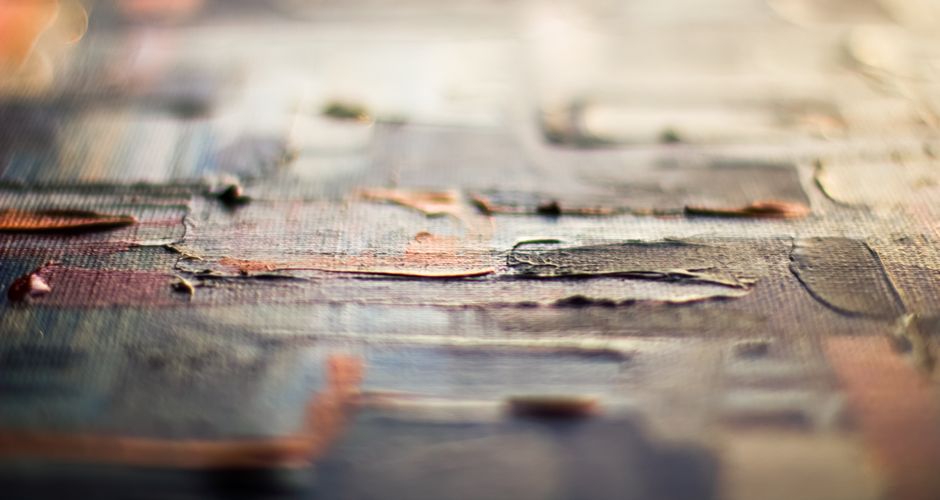
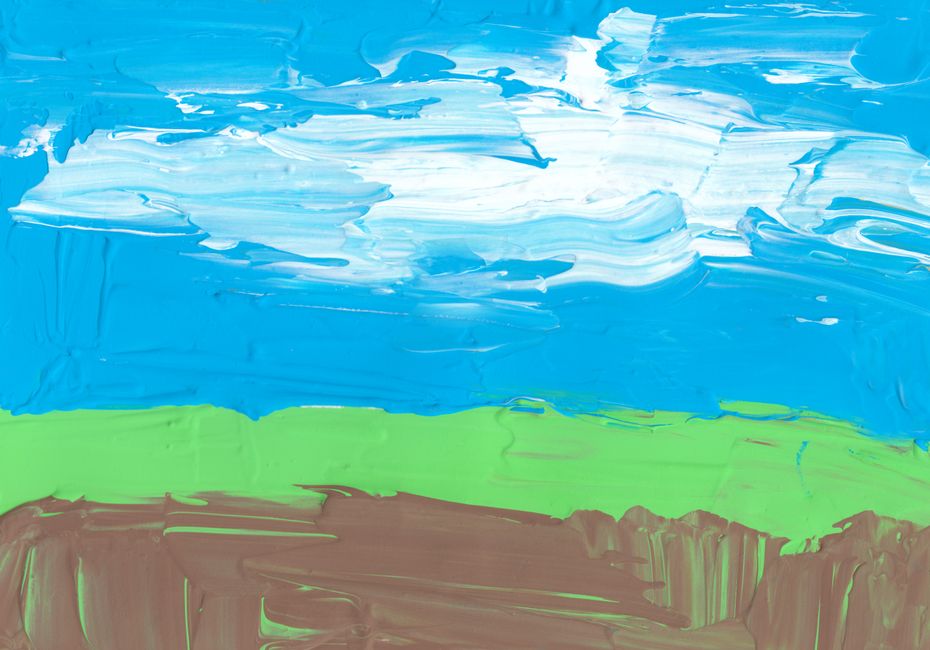
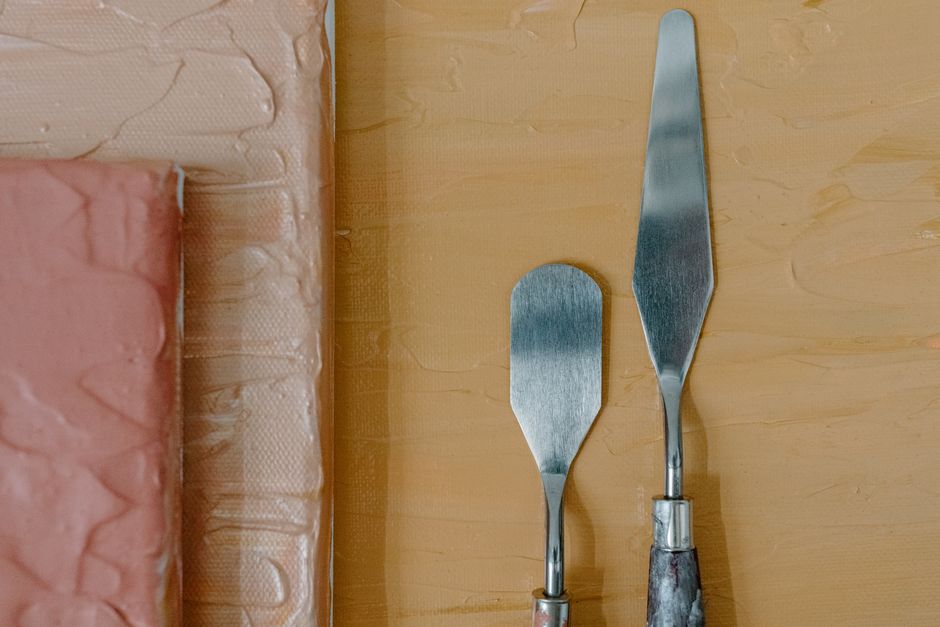
One of van Gogh’s most recognizable techniques is impasto — the thick application of paint that creates a textured, three-dimensional surface. He applied paint directly from the tube onto the canvas, using palette knives and brushes to build up ridges and swirls. This method allowed him to convey energy and emotion, as the physical traces of his hand became part of the composition. In works such as Starry Night, the swirling clouds and stars are built from layered, rhythmic strokes that suggest movement and turbulence.
Van Gogh’s brushwork was not arbitrary; he used directional strokes to lead the eye and create form. For landscapes, he often used short, hatched marks to indicate grass or fields, while longer, sweeping strokes depicted skies or flowing water. In portraits, he used more controlled, curved lines to model faces. The consistency of his application varied depending on the subject and his state of mind. Some paintings show a calm, deliberate hand, while others display a frenetic, almost aggressive energy.
This approach to brushwork was influenced by his study of the divisionist technique used by Georges Seurat, though van Gogh adapted it to his own expressive ends. Rather than creating optical blending through small dots, he used larger, more visible strokes that retained their individual characteristics. This gave his paintings a sense of immediacy and directness, as if the viewer could see the moment of creation.
Personal Struggles and Their Role in Artistic Expression
Van Gogh’s biography is marked by episodes of mental distress, financial hardship, and social isolation. These experiences are often cited as forces that shaped his art, but their relationship to his creative output is complex. He experienced periods of intense productivity followed by deep despair, and his letters reveal a constant struggle to maintain focus and purpose. It is important to avoid oversimplifying this connection; rather, his personal difficulties may have contributed to the heightened emotional content of his work without determining it in a direct cause-and-effect manner.
During his stay at the asylum in Saint-Rémy, van Gogh produced some of his most famous paintings, including Irises and The Starry Night. These works do not merely depict his surroundings but reflect a deep engagement with nature as a source of solace and order. His use of intense color and dynamic brushwork can be seen as an attempt to capture the essence of the world around him, perhaps as a counterbalance to internal chaos. Similarly, his time in Arles, before his breakdown, resulted in a series of bright, optimistic works such as Sunflowers, which demonstrate his ability to find beauty in simplicity.
Art historians and psychologists have examined van Gogh’s condition through various lenses, but no single interpretation fully explains his art. What remains clear is that his methods — particularly the physical act of painting — served as a means of processing experience. The thick impasto and rapid brushstrokes may have offered a way to externalize emotion, but the results were always grounded in careful observation and technical knowledge.
Case Studies: Applying Techniques in Specific Works
Examining individual paintings helps illustrate how van Gogh’s techniques worked in practice. In Starry Night, the composition is dominated by swirling patterns in the sky, created through overlapping arcs of blue, yellow, and white. The village below is rendered with smaller, more orderly strokes, contrasting the calm of the human world with the cosmic energy above. The thick paint builds up the moon and stars, making them appear to glow. This painting demonstrates how van Gogh used impasto to suggest luminosity and movement, while also organizing the canvas through repeated directional marks.
Another example is Sunflowers, a series of still lifes painted in Arles. Here, van Gogh’s brushwork is more contained, with petals formed by layered strokes of yellow and orange. The backgrounds are often flat, allowing the flowers to stand out. He used varying shades of yellow, from pale lemon to deep ochre, to create depth without relying on traditional shading. The texture of the paint adds a tactile quality, inviting the viewer to consider the physical presence of the object. This approach reflects his interest in capturing the essence of the subject rather than a photographic likeness.
In his self-portraits, van Gogh employed different techniques based on his mood. Some are painted with calm, even strokes, while others show a more agitated application of paint. The self-portrait from 1889, with its swirling background and intense gaze, uses both color and texture to convey a sense of psychological depth. The blue tones and rhythmic brushwork create a cohesive image that goes beyond mere representation, offering insight into the artist’s perception of himself.
Legacy and Influence on Later Artistic Movements
Van Gogh’s techniques had a profound influence on the development of modern art, particularly on Expressionism and Fauvism. Artists such as Edvard Munch and Ernst Ludwig Kirchner adopted his use of color to express emotion, while others like Henri Matisse drew from his bold palette and simplified forms. The emphasis on the artist’s subjective experience became a central tenet of Expressionism, and van Gogh’s work is often seen as a precursor to this movement.
In the decades after his death, his methods were studied and reinterpreted. The impasto technique was taken up by abstract expressionists, who used thick paint as a primary element of composition. The notion that brushwork could carry emotional weight became a standard part of artistic vocabulary. However, the context in which van Gogh worked — his isolation, his financial constraints, and his medical condition — was unique, and later artists applied his techniques in very different circumstances.
Today, van Gogh’s paintings are analyzed through the lens of art conservation, where his use of unstable pigments and thick paint presents specific challenges. Understanding his materials and methods helps conservators preserve his work for future generations. Additionally, digital imaging and scientific analysis have revealed details about his layering and brushstroke patterns, offering new insights into his process. This ongoing research continues to deepen the appreciation of his contributions, framing his work as both a product of its time and a lasting influence on how artists approach color and texture.